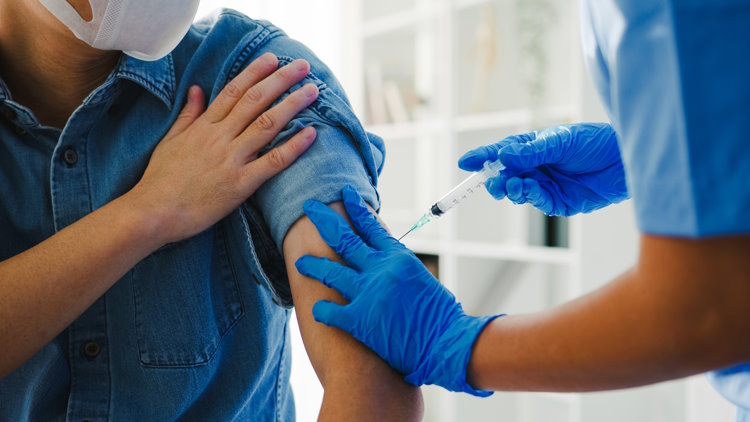
CSL Profits From Swine Flu
ABC February 17, 2010.
CSL's half-year earnings have swelled after it reaped $160 million from sales of the swine flu vaccine. The Melbourne-based biotechnology company posted a 23 per cent rise in net profit to $617 million for the first half of the financial year.
That was well above the market's expectations for a profit of between $510 and $547 million dollars. It says the strength in swine flu vaccine sales was partly offset by a $66 million slide in sales of the cervical cancer vaccine, Gardasil. It is delivering an interim dividend of 35 cents per share, up 17 per cent from the same period a year earlier.
CSL says its full-year net profit is expected to be at the top end of its previous forecasts, of between $970 million and $1.07 billion.
Nicole Roxon In Flu Vaccine Dilemma
Leigh Dayton and Matthew Franklin
From: The Australian. January 07, 2010
ONLY a quarter of the 21 million swine flu vaccination doses bought by the federal government have been administered as European health authorities offload surplus H1N1 vaccine because of flat demand.
And senior infectious disease expert Peter Collignon has questioned the value of mass vaccination, despite a fresh plea from Health Minister Nicola Roxon for Australians, particularly children and pregnant women, to be vaccinated.
As Ms Roxon's call won the backing of the Australian Medical Association, the minister confirmed the government was contractually bound to buy 21 million vaccine doses from pharmaceutical company CSL.Taxpayers will have to fund the purchase, reportedly assessed by industry analysts as worth about $120 million, even though only about 5.1 million doses have so far been shipped to vaccination providers.
Five thousand Australians have been hospitalised with swine flu since its emergence last year, with 190 deaths reported here among more than 10,000 around the world.At the height of last year's outbreak, 37,196 cases were verified, according to the Australian Influenza Surveillance Summary Report.
While Australians have enjoyed a flu-free summer, the virus has affected the northern hemisphere winter, with thousands of cases recorded. Last month, the US government described supplies of the vaccine as plentiful, and several European nations began selling their vaccine supplies to other nations because of lower-than-expected demand.
Yesterday, The Australian asked Ms Roxon whether taxpayers would have to foot the full bill for 21 million doses even if they were not used. She refused to comment, but pointed to remarks she made last month indicating that the government contracted to buy 21 million doses on the initial assumption it would need two doses a person.
"We're in the fortunate position, given the data from CSL, that there is only one dose required for adults, which means we will be able to vaccinate anyone in the community who wants to be vaccinated," she said. "I urge Australians to protect themselves, their families and their community against the pandemic flu by getting a free vaccine as soon as possible." .
However, Professor Collignon, of the Australian National University, said only pregnant women, people with severe or moderate asthma, HIV-AIDS, diabetes, heart disease or other conditions that suppress the immune system needed to be vaccinated. "If we look at what's happened in the northern hemisphere in the last two months, the flu has behaved exactly like it did here in winter," he said.
"I don't see any point in people being vaccinated in our summer."
He said the benefit of mass immunisation -- especially during summer, when only low levels of any influenza circulated -- did not justify the cost of producing and supplying the vaccine.
Professor Collignon pointed to the costly oversupply in France of vaccines for the H1N1 swine flu virus as an overreaction to the dangers of the illness, which he described as worse than the usual seasonal influenza but not as dangerous as initially feared. However, Ms Roxon said it was prudent and responsible to be vaccinated. Vaccinations administered during the low risk summer months would be still be effective the following winter.
"Children and pregnant women were particularly susceptible to the virus, and over-represented in both cases and deaths," Ms Roxon told The Australian in reference to last winter's outbreak.
"The flu had a significant effect on our health system, particularly our public hospitals. This is a burden we can avoid next flu season if enough people get vaccinated." CSL public affairs director Rachel David backed Ms Roxon, warning that the northern hemisphere experience suggested the flu was a serious threat.
"We are still advising people to have the vaccine," Dr David said. "We are expecting further outbreaks in February or March. "If you look at the information produced by the Australian and New Zealand intensive care unit specialists, pregnant women do experience far worse outcomes if they are affected, (as do) people who are overweight."
AMA president Andrew Pesce said a high death toll in the northern hemisphere proved vaccination was sensible. "In our epidemic in the middle of the year, hospitals like mine at Westmead had to cancel elective surgery for several weeks," Dr Pesce said.
Dr Pesce said Ms Roxon had taken the right actions on the epidemic.
"They are damned if they do in this situation," Dr Pesce said. "If they bought none and people died, they would be criticised. If they bought too much vaccine, they would be criticised. I know what position I would rather be in."
Medical virologist Dominic Dwyer agreed everyone should be vaccinated against the H1N1 virus because it did not act like ordinary flu in last winter's outbreak. "If you look at people in intensive care or those who died this winter, not all were from high-risk groups," said Professor Dwyer, of Sydney University and the Institute for Clinical Pathology and Medical Research at Westmead Hospital. "One-third of all people in intensive care with H1N1 were not from at-risk groups.
"Over 20 years as a virologist, I've never seen a seasonal flu as bad as this in terms of the number of cases in the intensive care unit and presentations to hospital." Professor Collignon said the mortality rate was lower than the 2500 estimated for seasonal flu.
He noted that for logistical and medical reasons, flu vaccines were generally less effective than those protecting against measles, mumps, diphtheria and other diseases against which Australians were immunised.
"The cost of delivering vaccine is about $35-$40 for seasonal flu. Only 5 per cent (of people) become symptomatic with influenza, so you have to vaccinate a lot of people to give some a benefit."
Professor Dwyer disagreed, saying it was money well spent: "Because H1N1 is a bit different than seasonal flu and had such a big impact on the healthcare system last winter, my feeling is all people should be vaccination," he said.
A Queensland Health spokesman said that 1,088,300 doses had been distributed statewide, with half a million stockpiled as at January 5.
Anger At Doctors' Swine Flu Jab Hard Sell
By Sharon Labi and Rosie Squires
From: The Sunday Telegraph February 07, 2010
DOCTORS have been told to issue the swine flu vaccine throughout summer in order to deplete the Government's stockpile before millions of doses expire.
Australia's chief medical officer Professor Jim Bishop will write to doctors this week urging them to "redouble efforts" to vaccinate as many patients as possible.
But critics say there is no legitimate medical reason to mass vaccinate against a flu that has proved to be far less serious than first feared.
The federal Government is committed to buying 21 million doses of the vaccine from manufacturer CSL, but the take-up rate has been slower than hoped.
GPs admit they are doing opportunistic vaccinations to avoid wasting the vaccine, which comes in multi-dose vials that need to be thrown out after 24 hours. Patients who present with food poisoning or for a routine blood test are leaving with a swine flu jab.
Medical researcher Professor Nikolai Petrovsky said the Government was pushing the vaccine to save face.
"There's no point in overselling it, which maybe they're doing to justify the fact they've wasted maybe $100 million or more on a vaccine they don't need," Dr Petrovsky told The Sunday Telegraph.
"Are they convincing people to have it so they're under less attack in terms of wasting money? That would be a concern because it's not driven by medical imperatives."
Infectious disease expert Professor Peter Collignon questioned the value of mass vaccinations and said there was no point vaccinating in summer except for high-risk groups.
The swine flu vaccine is due to expire this winter but Professor Bishop said the 12 month shelf-life was only technical. The vaccine would be reviewed and could be used on patients for a further year.
This winter's seasonal flu vaccine will protect against swine flu and will be rolled out within weeks. Professor Bishop said swine flu would be the dominant strain this winter. "We're urging (doctors) now that flu season is approaching and maybe approaching faster than usual that this is a good time to redouble efforts and get more out there," he said.
While seven million doses have been distributed, the Government can't say exactly how many Australians have been immunised. Penrith GP and founder of Doctors Action Adrian Sheen said only travellers were requesting the swine flu vaccine. "People will wait till the rollout of the seasonal flu vaccine, so there will be a lot of wastage," Dr Sheen said. "The multi-dose vials haven't helped of course."
Opposition health spokesman Peter Dutton said the vaccination program was a shambles. "It's a clearance sale of vaccines not because it's in people's best interests but because the Government's trying to cover its failed policy," he said.
Australian Medical Association vice-president Dr Steve Hambleton said doctors were pushing the vaccine to avoid a repeat of last winter's hospital admissions. "Opportunistic vaccination is the major push at the moment. If you go to the doctor for anything the doctor will most likely be offering a free swine flu vaccine to add to our pool of immune people," he said. The swine flu vaccine is free to everyone while the seasonal flu jab is free for over 65s and at-risk groups such as asthma sufferers.
H1N1 Flu Is a False Pandemic, Health Expert Claims
Monday, January 11, 2010. www.foxnews.com
A leading health expert said the swine flu scare was a "false pandemic" led by drug companies that stood to make billions from vaccines, The Sun reported Monday.
Wolfgang Wodarg, head of health at the Council of Europe, claimed major firms organized a "campaign of panic" to put pressure on the World Health Organization (WHO) to declare a pandemic.
He believes it is "one of the greatest medicine scandals of the century," and he has called for an inquiry.
An emergency debate on the issue will be held by the Council of Europe later this month.
The Council of Europe covers 47 European countries and seeks to develop common and democratic principles between the nations.
Wodarg said, "It's just a normal kind of flu. It does not cause a tenth of deaths caused by the classic seasonal flu.
"The great campaign of panic we have seen provided a golden opportunity for representatives from labs who knew they would hit the jackpot in the case of a pandemic being declared.
"We want to clarify everything that brought about this massive operation of disinformation. We want to know who made decisions, on the basis of what evidence, and precisely how the influence of the pharmaceutical industry came to bear on the decision-making."
He added: "A group of people in the WHO is associated very closely with the pharmaceutical industry."
The WHO recently reaffirmed its stance that the pandemic is not over. However, the number of swine flu deaths is dramatically lower than expected.
In an interview with France's L'Humanite Sunday, Wodarg also raised concerns about swine flu vaccines.
"The vaccines were developed too quickly. Some ingredients were insufficiently tested," he said.
"But there is worse to come. The vaccine developed by Novartis was produced in a bioreactor from cancerous cells, a technique that had never been used until now.
"This was not necessary. It has also led to a considerable mismanagement of public money.
"The time has come at last for us to make demands on governments. The purpose of the inquiry is to prevent more false alarms of this type in the future."
"We must make sure people can rely on the analysis and the expertise of national and international public institutions. The latter are now discredited, because millions of people have been vaccinated with products with inherent possible health risks."
Download: Management Plan for Pandemic Influenza
Download: PANDEMIC (H1N1) 2009 INFLUENZA VACCINE INFORMATION